Hydrate Smarter: Easy Daily Water Plan
by Abdulrasaq • Health & Lifestyle • December 1, 2025
For years, I thought hydration meant chasing a random “8 cups a day” rule. But once I started filming long tutorial sessions and working behind a laptop for hours, I noticed something: on the days I drank consistently, I had fewer headaches, better focus, and less fatigue. The difference wasn’t the amount-it was having a simple, repeatable plan. This daily water routine works at home, school, or the office and adjusts easily for exercise or heat.
Trusted health sources like the CDC and the Mayo Clinic emphasize that hydration needs vary by weight, activity, and environment-not fixed formulas. The method below follows that same logic.
1) Pick Your Daily Target (Fast Formula)
Rule of thumb: 30-35 ml per kg body weight (≈ 0.5-0.7 oz per lb).
- Example: 70 kg × 30-35 ml = 2.1-2.45 L/day (≈ 9-10 cups).
- If using pounds: weight (lb) × 0.5-0.7 = ounces per day → divide by 8 to get cups.
This aligns with hydration guidance from the Mayo Clinic, which notes that daily fluid needs vary but generally fall between 2-3 liters for healthy adults .
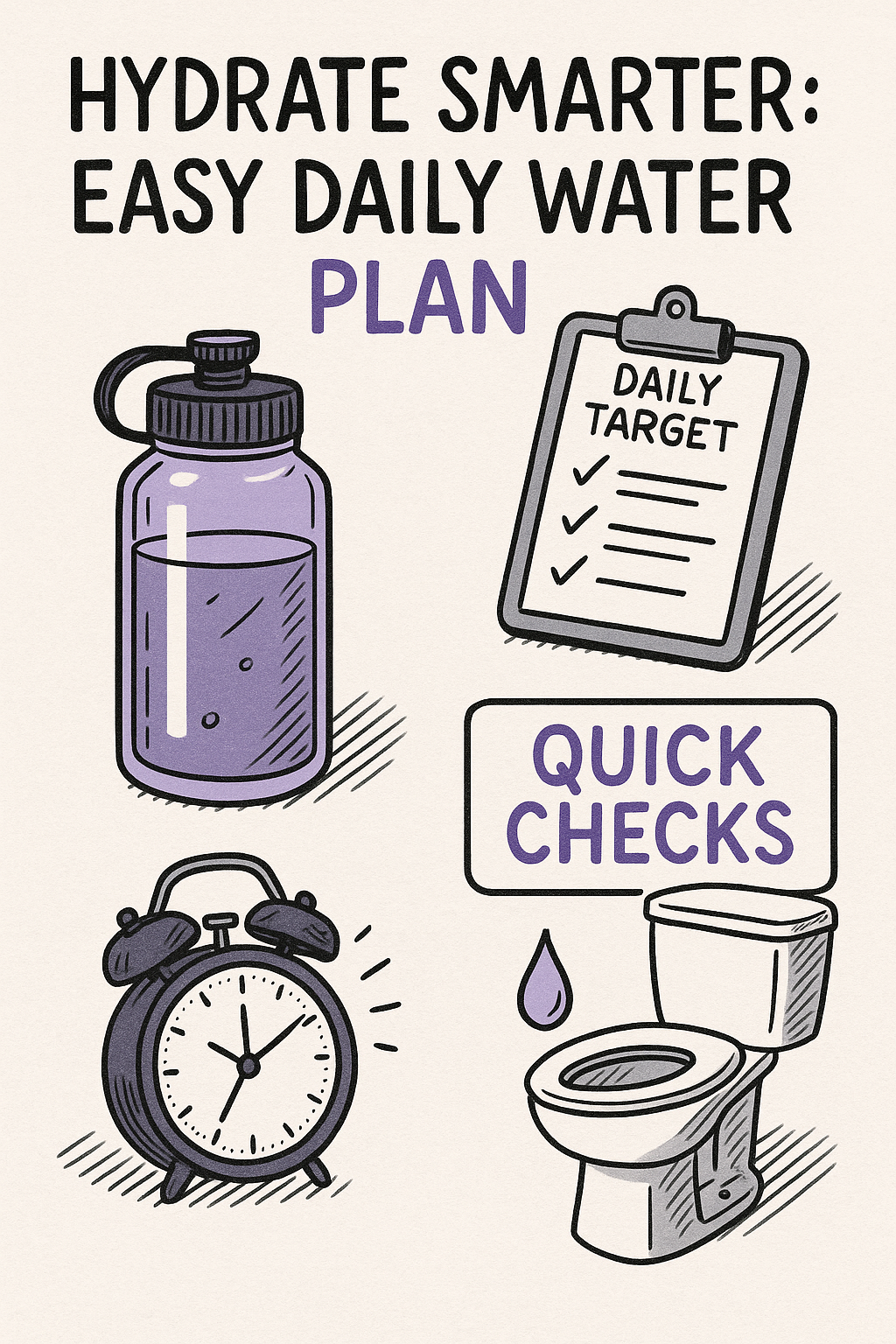
2) Choose One Bottle & Count Refills
A single bottle makes hydration automatic because you don’t have to “track cups” all day. A 500-750 ml (16-25 oz) bottle works best and fits into most bags.
- Measure the bottle’s exact size once using a measuring cup.
- Daily target ÷ bottle size = number of refills.
- Use a piece of tape on the bottle and draw 3-4 dots-color one in every refill.
3) Build a Simple Schedule (No Chugging)
Spread your water intake so you stay hydrated without feeling bloated.
- Morning (on wake): 250-300 ml restart hydration.
- With meals: ~250 ml during breakfast, lunch, and dinner.
- Between meals: steady sips every 30-60 minutes.
- Evening: small sips; avoid heavy chugging before bed.
4) Adjust for Activity & Heat
- Exercise: add 350-500 ml per 30 minutes of sweating.
- Hot or humid days: add 250-500 ml spread evenly.
- Salty meals, caffeine, or long screen-time sessions: drink an extra glass.
The CDC recommends increasing fluids on hot days or when physically active-your routine should adapt too.
5) Quick Checks: Am I Hydrated?
These simple signals help you avoid both underhydration and overhydration.
- Pee color: pale straw is ideal; darker yellow = drink now.
- Bathroom rhythm: usually every 3-4 hours when hydrated.
- Energy/focus: hydration can improve alertness within 10-20 minutes.
- Dry lips/skin: may indicate you’re behind on fluids.
6) Make It Automatic
- Keep your bottle in sight-desk, bag pocket, car cup holder.
- Set 3-4 light reminders (e.g., 9:30, 12:30, 15:00, 18:00).
- Refill your bottle the moment it’s empty.
- Add lemon, cucumber, or mint if flavored water helps you drink more.
Comparison Table: How Much Water Do You Need?
| Body Weight | Daily Target | Bottle Size | Refills Needed |
|---|---|---|---|
| 60 kg (132 lb) | 1.8-2.1 L | 600 ml | 3-4 refills |
| 70 kg (154 lb) | 2.1-2.45 L | 600 ml | 4 refills |
| 80 kg (176 lb) | 2.4-2.8 L | 750 ml | 3-4 refills |
Real-World Examples
Case Study 1 - Long Work Sessions
While editing multiple QuickInfoSpot guides in a day, I noticed my energy dipped around noon. After switching to a 600 ml bottle with a 4-refill plan, my afternoon headaches dropped dramatically. The routine-not the number-made the biggest difference.
Case Study 2 - University Student
A student shared that she often forgot to drink during long lectures. Using a single 500 ml bottle with 5 dots on tape helped her stay consistent. Within two weeks, her concentration improved during evening study sessions.
Case Study 3 - Hot Weather & Outdoor Work
A reader who works outdoors in Lagos used the same formula but added 500-700 ml during midday heat. This matched CDC advice for hot-weather hydration and significantly reduced his fatigue.
Safety & Notes
- If you have kidney, heart, or fluid-restriction conditions, follow your clinician’s guidance.
- Avoid extreme chugging-hydrate gradually through the day.
- Thirst is helpful but not perfect-older adults and busy workers may under-drink without noticing.
Example: 2.4 L Plan (Using a 600 ml Bottle)
- Wake: 300 ml
- Morning: sip to finish Refill #1
- Lunch: ~250 ml, then Refill #2
- Afternoon: finish Refill #3
- Dinner: ~250 ml, then Refill #4
Hydration doesn’t need rules you can’t remember. A bottle you like, a target that fits your body, and a simple refill routine can transform your energy, focus, and daily rhythm. Stay consistent, adjust for your environment, and let this plan work quietly in the background.