How to Keep Your Room Cool Without an Air Conditioner
by Abdulrasaq • Health & Lifestyle
I learned how powerful non-AC cooling tricks can be during a heatwave last year. My old apartment turned into an oven by midday, and running an air conditioner wasn’t an option. So I researched cooling strategies recommended by home-ventilation experts. With a mix of shading, airflow management, and spot-cooling, I lowered the indoor temperature by several degrees without using an AC.
Staying cool without an air conditioner comes down to three things: blocking incoming heat, pushing hot air out, and cooling the space around you. This guide gives you the exact steps that work, even during hot seasons.
What You’ll Need
- Curtains or a light-colored sheet for sun-blocking
- A standing or table fan (two fans = better airflow)
- Frozen bottles or a bowl of ice (for DIY cooling)
- Clips or tape + a small towel (for airflow hacks)
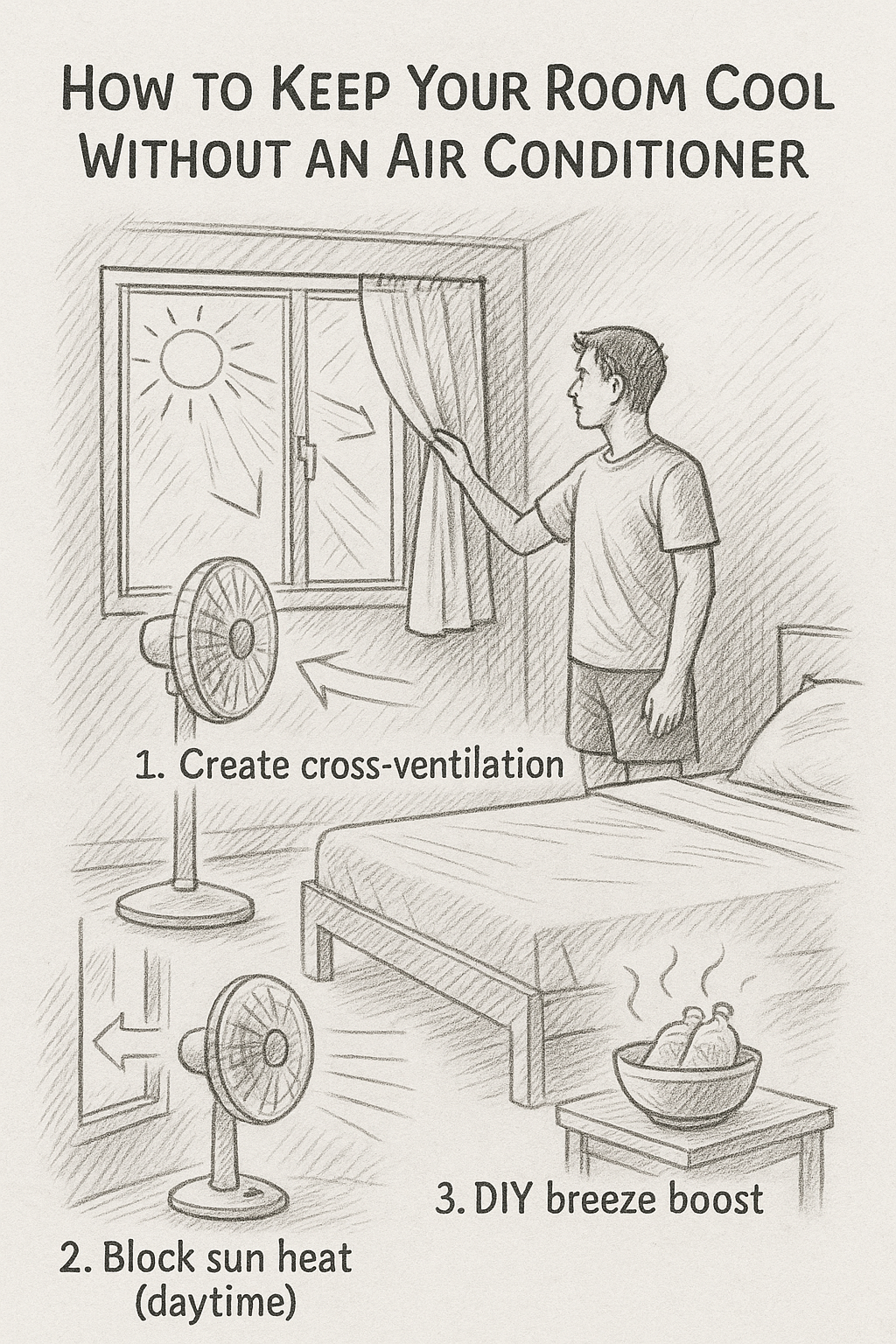
Step 1 - Block Heat From Entering (Daytime)
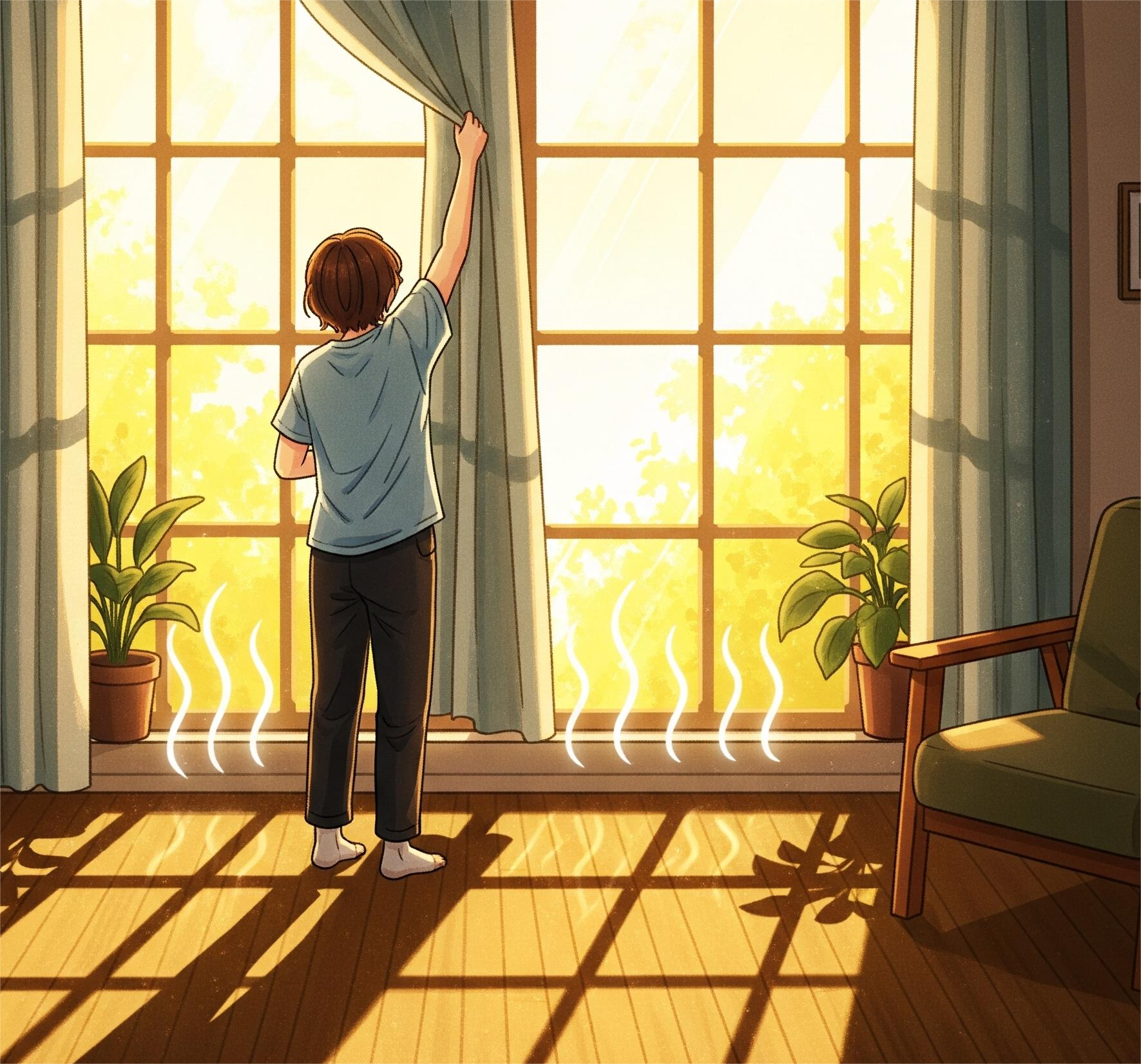
According to Energy.gov, direct sunlight can increase indoor temperatures by up to 10°F (5°C). Stopping heat at the window is the single biggest win.
- Close sun-facing windows during peak heat hours.
- Use curtains or hang a light sheet behind the window to reflect heat outward.
- Reflective foil or temporary window film can reduce radiant heat significantly.
Step 2 - Create Cross-Ventilation
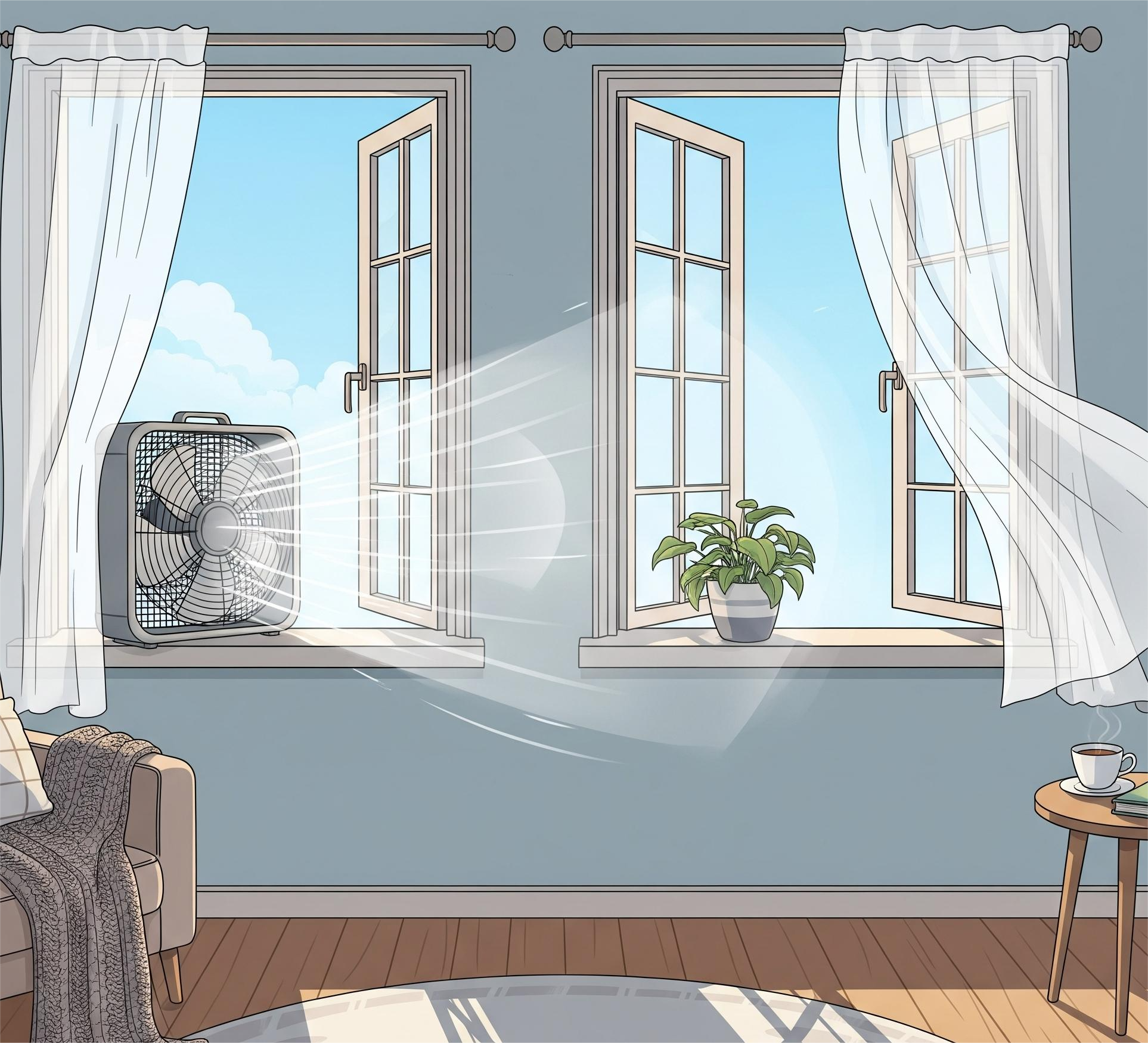
Cross-ventilation pulls fresh air from a cooler side and pushes hot air out. Architectural Digest notes this is the most effective natural cooling method.
- Open a window or door on the shaded side of your space.
- Place a fan at the hottest window blowing out like an exhaust system.
- With two fans: one blows out, one pulls cool air in.
Step 3 - DIY Spot Cooling (Simple & Effective)
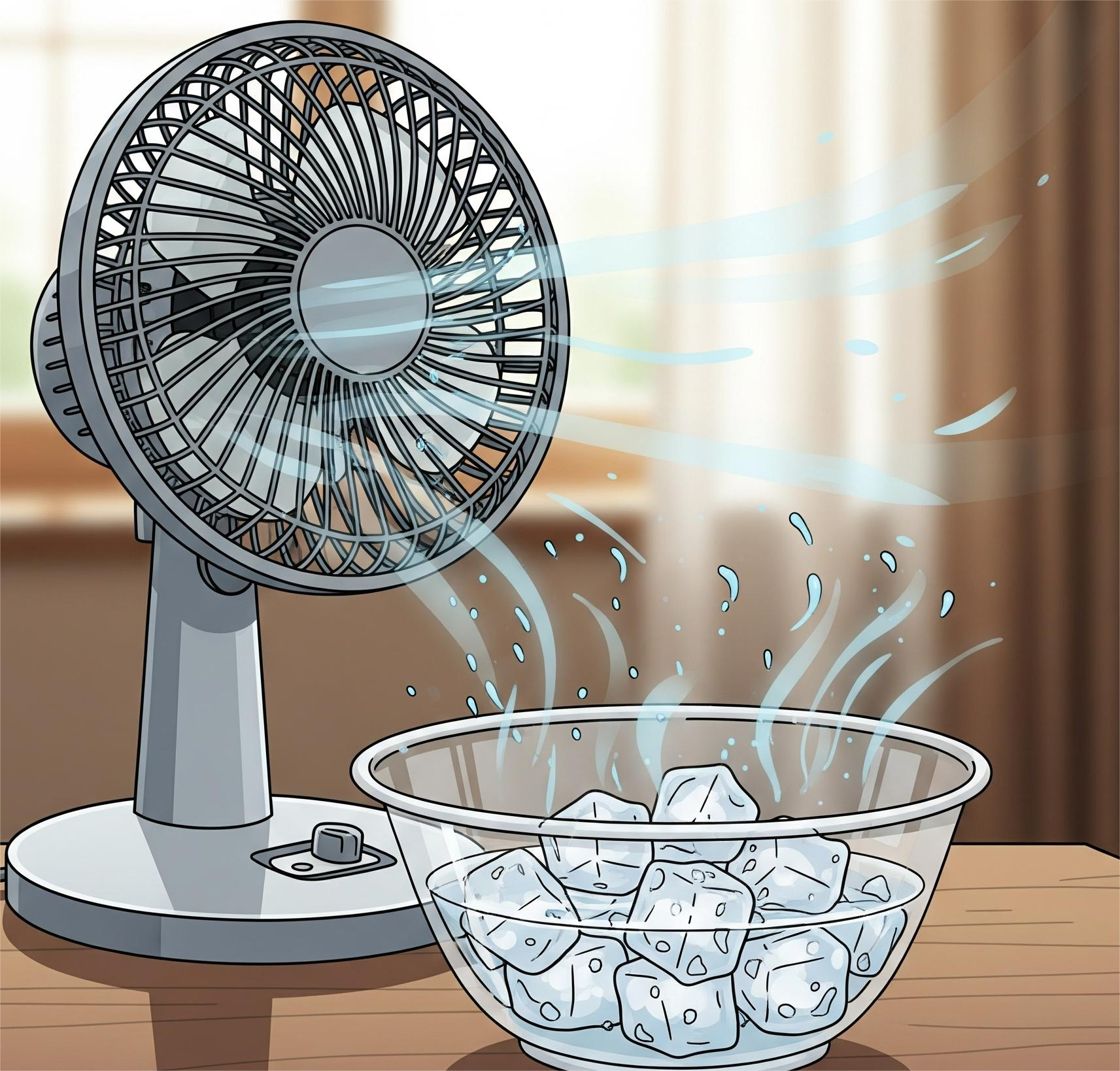
- Place a bowl of ice or frozen water bottles in front of a fan.
- Use a damp towel behind the fan for evaporative cooling (works best in low humidity).
- Direct airflow at your seating or sleeping position-not the empty room.
This method doesn’t cool the whole room dramatically, but it cools you instantly.
Step 4 - Night Purge & Morning Seal
This is one of the most underrated cooling techniques.
- After sunset, open opposite windows and run a fan for 20–40 minutes.
- In the morning, close windows and curtains before the sun heats the walls.
Step 5 - Reduce Heat Sources Indoors
- Turn off unused electronics; chargers and adapters give off heat.
- Cook earlier in the day or use outdoor/low-heat options.
- LED bulbs emit far less heat than incandescent bulbs-consider switching.
Optional: Better Humidity & Bedding
- High humidity? Dry laundry outdoors. Indoor drying raises heat + humidity.
- Salt or rice bowls help a little, but a dehumidifier works far better.
- Sleep cooler: breathable cotton bedding + light pajamas + cool water nearby.
Comparison Table: What Actually Cools Best?
| Method | Effectiveness | Notes |
|---|---|---|
| Blocking sunlight | ★★★★★ | Stops heat before it enters the room |
| Cross-ventilation | ★★★★★ | Moves hot air out quickly |
| DIY ice fan | ★★★☆☆ | Good personal cooling, short-term |
| Night purge | ★★★★☆ | Great for reducing stored heat in walls/furniture |
Real Case Studies
Case Study 1 - Hot Apartment During Exams
A university student used curtains + night purge + ice fan. His room went from unbearable to manageable during a 38°C week with no AC running at all.
Case Study 2 - Humid Room in a Shared House
Mariam struggled with humidity making the heat worse. Switching to outdoor laundry drying and adding window shading improved comfort dramatically.
Case Study 3 - Bedroom Too Hot for Sleep
Daniel placed his fan in exhaust mode + sealed the door gap with a rolled towel. His room cooled faster at night and he slept better without AC.
Common Mistakes to Avoid
- Running fans with hot windows fully open-this circulates hot air instead of removing it.
- Leaving curtains open during peak sun exposes the room to radiant heating.
- Placing ice too far from airflow-keep it close for effective cooling.
- Letting wet towels drip near electrical cables-avoid moisture hazards.
30-Second Version
- Close sun-facing windows + block light.
- Run a fan blowing OUT at the hottest window.
- Open a cool-side window for airflow.
- Use ice in front of a fan for spot cooling.
- Night purge → morning seal.
You don’t need an air conditioner to stay comfortable. Combining shading, airflow, and targeted cooling can drop your room temperature noticeably. Try these steps for a few days and adjust based on your room layout-you’ll feel the difference.