Forget the daily watering chore. Learn how to build high-performance self-watering containers using simple household items.
One of the biggest hurdles for urban gardeners is consistency. A small pot on a sunny balcony can dry out in hours. If you miss just one day, your peppers might wilt and your lettuce will bolt. Self-watering planters (also known as Sub-Irrigated Planters or SIPs) solve this by using a reservoir and capillary action to keep the soil perfectly moist.
How Does It Work?
Contrary to the name, the plants don't "water themselves." Instead, the planter is divided into two sections:
- The Water Reservoir: A space at the bottom that holds a supply of water.
- The Soil Chamber: The upper section where your plants grow.
Connecting the two is a "wicking point"—usually a small column of soil that extends down into the water. Through capillary action, the moisture travels up from the reservoir into the main soil mass, providing a steady, bottom-up supply of water as the plant needs it.
The Science: Capillary Action & Adhesion
How does water move upward against the force of gravity? It's all thanks to capillary action. This occurs because of two forces: adhesion (the attraction between water and the soil particles) and cohesion (the attraction between water molecules themselves).
As water molecules at the top are used by the plant or evaporate, they pull the molecules below them upward. In a well-structured potting mix with many tiny air spaces, this create a continuous "chain" of moisture from the reservoir to the roots. It’s like a sponge that stays wet as long as one corner is touching water.
The "Soda Bottle" Starter SIP
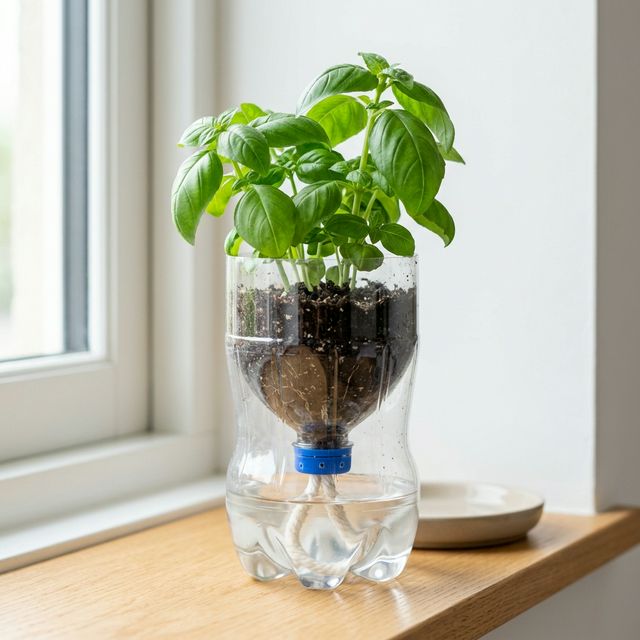
This is the perfect project for herbs like mint or basil on a windowsill. It takes 5 minutes and costs nothing.
- Clean a 2-liter soda bottle and cut it in half.
- Invert the top half (the neck) and place it inside the bottom half.
- Thread a piece of cotton rope or a strip of microfiber cloth through the bottle neck.
- Fill the bottom with water (just below where the neck starts).
- Fill the top with a lightweight potting mix (not garden soil!), ensuring the wicking rope is buried in the center.
The Heavy-Duty 5-Gallon Bucket SIP
If you want to grow tomatoes or peppers, you need more volume. This design is rugged and lasts for seasons.
- The Core: Place a small perforated container (like a yogurt tub with holes) at the bottom of a 5-gallon bucket. This will be your wicking chamber.
- The Platform: Cut a plastic circle (from another bucket lid) to fit snugly inside the bucket, resting on top of the wicking chamber. Drill dozens of small drainage holes in this circle.
- The Fill Tube: Insert a 1-inch PVC pipe through the platform all the way to the bottom. This is how you'll refill the reservoir without disturbing the soil.
- Overflow Hole: Drill a small hole in the side of the bucket, just below the level of the platform. This prevents the soil from becoming waterlogged if it rains.
Best Plants for Self-Watering Systems
While almost anything can grow in a SIP, some plants are practically made for this setup:
- Tomatoes: They are heavy drinkers and hate "feast or famine" watering. A constant moisture level prevents Blossom End Rot.
- Peppers: Like tomatoes, they thrive on consistency.
- Leafy Greens: Lettuce, spinach, and Swiss chard stay tender and crisp when they don't experience drought stress.
- Herbs: Basil, mint, and cilantro grow incredibly vigorously in sub-irrigated containers.
Avoid: Succulents, cacti, and Mediterranean herbs like lavender or rosemary, which prefer their soil to dry out completely between waterings.
Pro-Tip: Use the Right Mix
Traditional garden soil is too heavy for SIPs. It will compact and turn into an anaerobic sludge. Always use a soilless potting mix containing peat moss or coco coir and perlite. These materials have the high "wicking potential" needed to draw water upward against gravity.
Maintenance Tips
- Mosquitoes: If your overflow hole is large, cover it with a bit of mesh to prevent mosquitoes from breeding in your reservoir.
- Flushing: Because water always moves upward, salts from fertilizers can build up at the soil surface. Once a month, water heavily from the top until water flows out the overflow hole to "flush" the system.
- Monitoring: Use a simple wooden dowel as a dipstick in your fill tube to check the water level without guessing.
Troubleshooting Common Issues
Even the best system can run into hiccups. Here’s how to fix the most common SIP problems:
1. The "Sour" smell (Anaerobic Soil)
If your soil smells like rotten eggs, it’s likely waterlogged. This happens if your wicking chamber is too large or your overflow hole is blocked. Ensure there is an "air gap" between the water surface and the soil platform so the roots can breathe.
2. Algae in the Reservoir
If your container is translucent (like a clear soda bottle), light will hit the water and cause algae growth. Painting the exterior of the reservoir or wrapping it in dark tape will block the light and keep the water clean.
3. Root Rot
If your plants are wilting despite wet soil, check the roots. If they are brown and mushy, they are drowning. Increase the drainage holes in your platform or use a lighter, more porous potting mix with extra perlite (up to 30%).
4. Fertilizer Crust
Because water moves up, it carries minerals to the top. This can look like a white or yellow crust on the soil. Simply scrape it off or flush the soil from the top once a month as mentioned earlier.
Conclusion
Self-watering planters are the ultimate insurance policy for the urban gardener. They save water, save time, and result in healthier plants with deep, consistent root systems. Start with a soda bottle herb garden today and see the difference!