Strawberries are the perfect urban crop, but they are space-hogs. Learn how to grow 30 plants in the footprint of a single dinner plate.
If you grow strawberries in a traditional garden bed, they send out runners and quickly take over square meters of space. In an apartment, you don't have that luxury. The solution is the Vertical Strawberry Tower. This method exploits the strawberry's natural tendency to trail, allowing the fruit to hang in the air where it's safe from slugs and rot.
Why Vertical Towers?
Aside from the massive space savings, vertical towers solve the three big problems of strawberry gardening:
- Pest Control: Slugs and snails find it much harder to climb a plastic or ceramic tower than to crawl across a mulch-covered bed.
- Rot Prevention: When strawberries sit on damp soil, they develop "grey mold." In a tower, the berries hang in the breeze, staying dry and clean.
- Harvesting: No more bending over. You can harvest your dessert at eye level.
Choosing the Right Variety
Not all strawberries are equal for towers. You have two main choices:
1. June-Bearing
These produce one massive harvest in early summer. Great if you want to make jam, but then the plant is "done" for the year. Not ideal for towers where you want constant visual interest.
2. Ever-Bearing (Recommended)
Varieties like Albion, Seascape, or Quinault produce smaller harvests continuously from late spring until the first frost. This is the gold standard for urban towers.
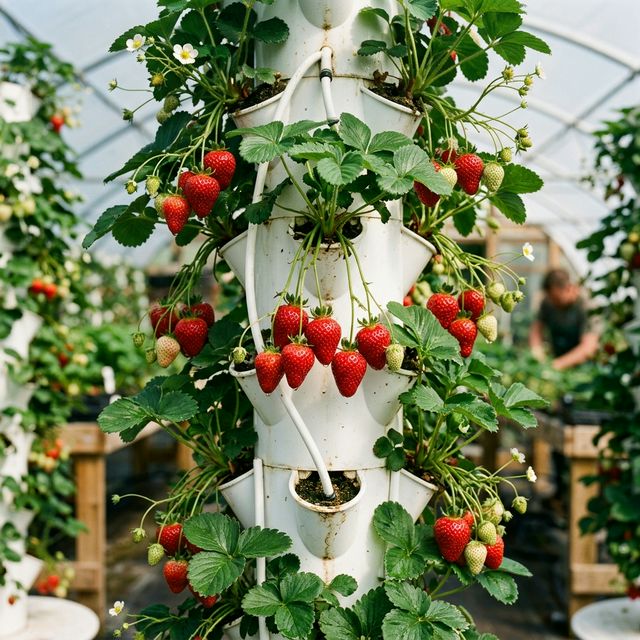
Building vs. Buying
You can buy pre-made stackable planters (like the GreenStalk), which are excellent but can be pricey. If you're on a budget, you can build a PVC Tower:
- Take a 4-inch diameter PVC pipe (food grade).
- Drill 2-inch holes every 6 inches, staggered around the pipe.
- Cap the bottom and secure it into a large base pot filled with gravel for weight.
- Fill with a lightweight potting mix.
The Secret: The Watering Core
The biggest failure in vertical towers is that the bottom plants drown while the top plants dry out. To fix this, insert a 1-inch "watering pipe" (with tiny holes drilled throughout) down the center of the tower. When you pour water into this central pipe, it distributes moisture evenly from top to bottom.
Maintenance Tips
- Sun: Strawberries need 8 hours of sun. Rotate your tower 90 degrees every week to ensure all sides get equal light.
- Feeding: Strawberries are heavy feeders. Use a liquid fertilizer high in Potassium (for fruit development) once every 10 days while in blossom.
- Winter: In cold climates, strawberries in towers are vulnerable to root freeze. Move the tower into a garage or wrap it in heavy insulation once the plant goes dormant.
Wintering Your Tower
In most climates, strawberry towers need protection in winter. Because the roots are in small, exposed pockets of soil, they can freeze solid very quickly. If you have a garage or a sheltered hallway, move the tower there once the plant goes dormant (turning brown). If it must stay on the balcony, wrap the entire tower in several layers of bubble wrap or a heavy frost blanket to keep those crown temperatures stable.
Conclusion
The vertical strawberry tower is the ultimate urban garden hack. It's productive, beautiful, and turns your balcony into a literal fruit wall. If you have any vertical space at all, this should be your next project.