Running out of floor space? The only way left is up. Learn how to build a professional-grade vertical garden for the price of a cup of coffee.
One of the biggest hurdles for urban gardeners is the cost of infrastructure. Pre-made trellises and cages can cost $30-$50 each. If you're growing on a budget, that's more than the cost of the seeds and soil combined. Enter the String Trellis—a lightweight, non-destructive, and incredibly cheap solution used by commercial green-house growers that you can adapt for your balcony or windowsill.
The Concept: Tension is Everything
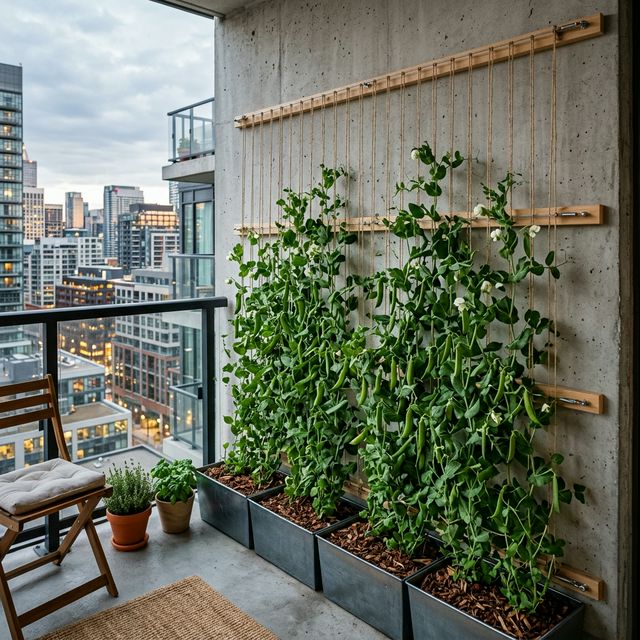
A string trellis relies on vertical tension to support climbing plants like peas, beans, cucumbers, and even small melons. Instead of a rigid structure, you provide a path of least resistance (usually jute or nylon twine) for the plant to wrap its tendrils around. As the plant grows, you simply wind it around the string.
The $5 Shopping List
- Twine (Jute or Sisal): $2.00 at most hardware stores. Natural fibers provide better "grip" than plastic.
- Cup Hooks (or Command Hooks): $2.50. These will be your top anchor points.
- Rocks or Heavy Stakes: Free. These will be your bottom anchor points.
Step-by-Step Assembly
Step 1: The Top Anchor
If you have a ceiling or a beam above your garden area, screw in cup hooks every 8 inches. If you are a renter and cannot drill, use Heavy Duty Command Hooks. They can hold the weight of a pea vine with ease.
Step 2: The Bottom Anchor
You don't want to tie the string to the plant's stem (this can choke it as it grows). Instead, tie the string to a heavy rock or a small wooden stake and bury it at the bottom of your pot. Alternatively, tie it to the rim of the container.
Step 3: The Tension Line
Run your twine from the top hook down to the bottom anchor. It should be taut, like a guitar string, but not so tight that it's about to snap. Repeat this for every plant you intend to grow.
Best Climbing Plants for Strings
- Sugar Snap Peas: Light and fast. They will cover a string trellis in 4 weeks.
- Pole Beans: More aggressive than peas. They will twist around the string automatically.
- Malabar Spinach: A heat-loving tropical vine that provides edible leaves all summer.
- Cucumbers: We suggest choosing "Space Saver" or "Dwarf" varieties to keep the weight manageable.
Pro Tip: Lowering and Leaning
Commercial tomato growers use a technique called "Lower and Lean." If your plant reaches the top of the trellis, you can untie the string from the top hook, let out a few extra feet of twine, and move the anchor point one hook to the left or right. This allows the plant to keep growing horizontally while the fruit remains at a harvestable height.
Conclusion
Vertical gardening shouldn't be expensive. With just some twine and a few hooks, you can turn a bare wall into a living curtain of food. It's beautiful, functional, and costs less than almost anything else in your garden.