Throwing food scraps in the trash feels wrong. But composting in a 1-bedroom apartment sounds smelly. Here are the two methods that actually work indoors.
If you have a backyard, you can just pile leaves and apple cores in a corner and wait. In an apartment, you don't have that luxury. You need a system that is compact, sealed, and—crucially—odorless. The two heavyweights of indoor composting are Vermicomposting (Worms) and Bokashi (Fermentation).
Contender 1: Vermicomposting (Worm Bin)
The Concept: You keep a bin of Red Wiggler worms. You feed them your veggie scraps. They eat it and poop out "black gold" (castings), which is the best fertilizer on earth.
Pros:
• Fun (like owning pets 1,000 pets).
• Produces finished compost ready for plants.
• Free (once you buy the worms).
Cons:
• Picky eaters (No citrus, no onions, no meat, no dairy).
• Risk of fruit flies if not managed well.
• Can die if they get too hot or cold.
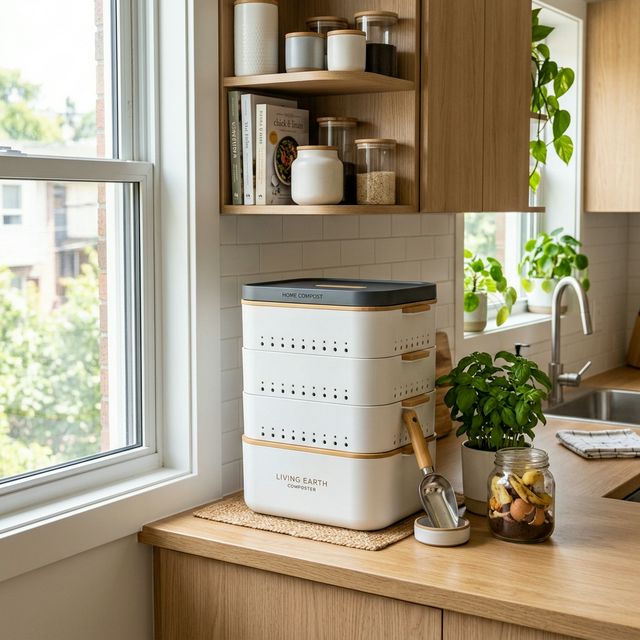
Contender 2: Bokashi
The Concept: Bokashi is a Japanese method of pickling your waste. You put scraps in an airtight bucket and sprinkle them with "Bokashi Bran" (inoculated with lactobacillus bacteria). The food ferments rather than rots.
Pros:
• FAST (ferments in 2 weeks).
• Can eat ANYTHING (Meat, dairy, bones, citrus, onions).
• Zero smell (as long as the lid is closed).
Cons:
• Recurring cost (you have to buy the bran).
• Two-step process: The fermented waste is acidic. You eventually have to bury it in soil for 2
more weeks to neutralize it before planting.
3. Troubleshooting Your Indoor Compost
Worm Bin Issues: The "Great Escape"
If you see your worms crawling up the sides of the bin or trying to escape through the lid, something is wrong. Usually, it's one of two things:
1. Too Wet: The bedding should feel like a wrung-out sponge. If it's dripping, add shredded cardboard.
2. Acidic: If you accidentally added too many onions or citrus, the pH will drop. Add crushed eggshells to neutralize the bedding.
Bokashi Issues: The "Wrong Kind of Smell"
Bokashi should smell like pickles or vinegar. If it smells like rotten eggs or a dumpster, the fermentation has failed.
The Fix: You likely didn't use enough bran, or you left too much air in the bucket. Always press the waste down firmly with a plate or a dedicated plunger to remove air pockets. "Anaerobic" means *without air*!
4. The Harvest: Using Your Urban Gold
Once you have your compost, how do you use it in small spaces?
- Top Dressing: Sprinkle an inch of worm castings on top of your houseplants. Every time you water, the nutrients will tea-steep into the roots.
- Bokashi Soil Factory: If you don't have a yard, use a large "tote" bin filled with old potting soil. Bury your Bokashi waste in the middle. In 2-3 weeks, the waste will vanish, and you'll have premium, rejuvenated soil for your balcony pots.
- Compost Tea: Soak a handful of castings in a gallon of water overnight. Use this "tea" to give your heavy-feeders (like tomatoes or peppers) a liquid boost.
Final Comparison Table
| Feature | Worm Bin | Bokashi |
|---|---|---|
| Odor Level | Earthy (like rain) | Vinegary / Pickled |
| Maintenance | Weekly feeding | Daily (open/close/press) |
| End Product | Ready-to-use soil | Fermented "waste" |
Expert Tip: The "Two Bucket" Rotation
To keep a continuous composting cycle, you need two buckets. While one bucket "ferments" for two weeks after being filled, you start filling the second one. This prevents you from having to throw scraps in the trash while waiting for the bacteria to work their magic. Always drain the "Bokashi tea" (the liquid at the bottom) every 2-3 days—this stuff is liquid gold for your houseplants but will smell terrible if left to stagnate.
The Science of Anaerobic Fermentation
Bokashi works through anaerobic fermentation, meaning it happens without oxygen. The lactobacillus bacteria in the Bokashi bran produce lactic acid as they break down the food waste. This high-acid environment prevents putrefaction (rotting), which is why there is no foul odor. It's essentially the same biological process used to make sauerkraut or kimchi, just applied to your banana peels and coffee grounds.
Troubleshooting Fruit Flies in Worm Bins
Fruit flies are the nemesis of the indoor worm composter. If you notice a cloud of tiny flies when you open the lid, you are likely overfeeding or not burying the food deep enough. Always bury fresh scraps under at least two inches of bedding (like shredded moistened newspaper or coco coir). A thick layer of dry bedding on the very top of the bin acts as a physical barrier that fruit flies cannot penetrate to lay eggs.
Cost Analysis Over 1 Year
Which system is cheaper? A worm bin requires a higher upfront cost (around $30-$50 for the worms and the plastic bins), but it is virtually free to maintain for years. Bokashi has a lower barrier to entry (you can use a cheap 5-gallon bucket from a hardware store), but you must constantly purchase Bokashi Bran. Over the course of a year, Bokashi will cost you approximately $60 in bran, making the worm bin the better long-term financial investment for frugal urban gardeners.
Conclusion: Closing the Loop
In a city, we are often disconnected from where our food goes. Composting at home, whether with a bucket of pickles or a bin of worms, is the ultimate way to close that loop. It turns a "problem" (waste) into a "solution" (fertility). Whichever side you choose in the showdown, your plants will reward you with explosive growth.