Turn your windswept, concrete balcony into a productive food forest. It requires strategy, not just potting soil.
Gardening on a balcony is extreme gardening. You are dealing with microclimates that don't exist on the ground floor. The wind speed is higher, the air is drier, and the heat reflects off the concrete walls, baking your plants. But with the right setup, a balcony can be pest-free (no deer!) and highly productive.
Challenge #1: The Wind
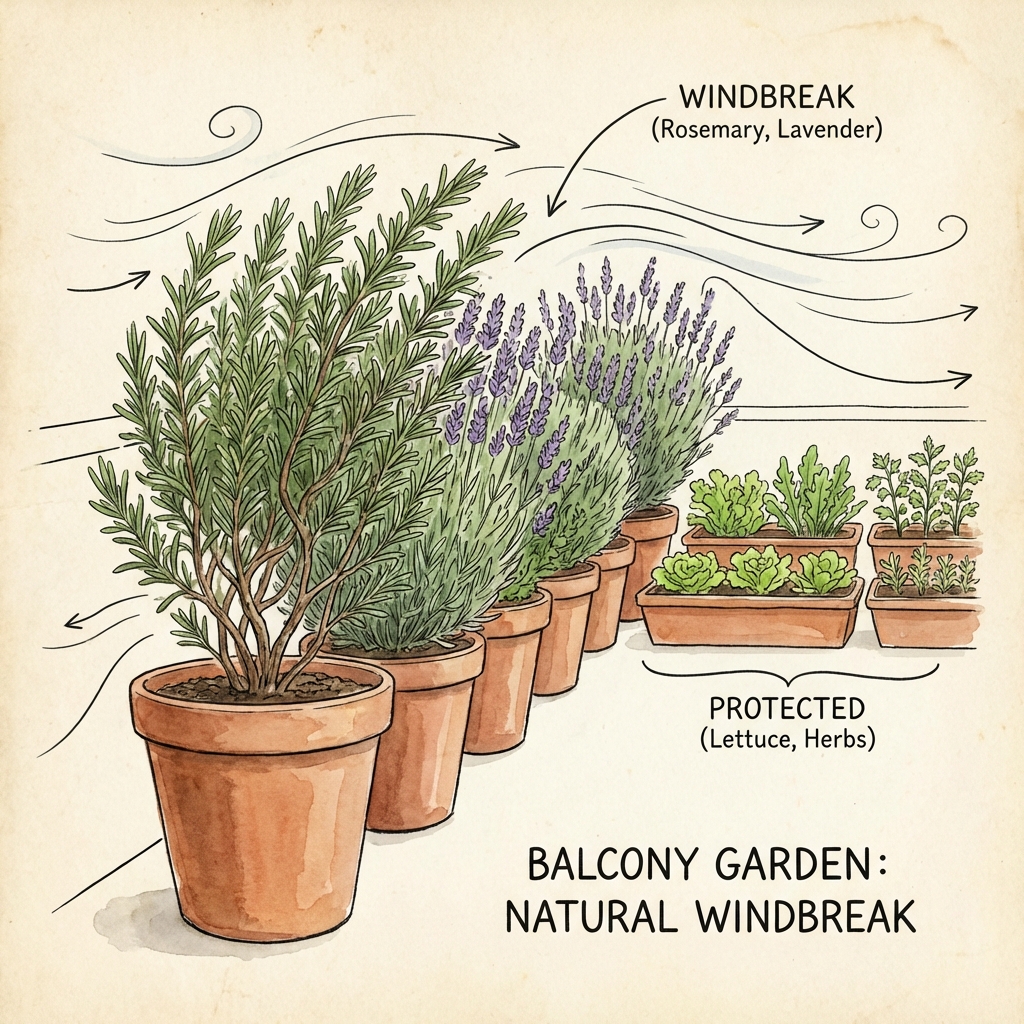
Wind is the enemy. It acts like a giant hair dryer, stripping moisture from leaves faster than the roots can drink. It also physically breaks stems.
The Solution: Windbreaks. You need to create a sacrificial layer. Place hardy, woody plants like Rosemary, Lavender, or a trellis of Ivy on the railing side (the windward side). These plants can take the beating. Place your delicate lettuces, peppers, and basils behind them, in the "slipstream" of calm air.
The "Sun Map" Technique
In a backyard, the sun moves across an open sky. On a balcony, the sun is blocked by the building above you, the railings, and neighboring structures. To succeed, you must create a Sun Map.
1. On a sunny Saturday, check your balcony every hour from 8 AM to 6 PM.
2. Note which areas get "Direct Sun" (sun hitting the floor), "Dappled Sun" (through railings), and "Full Shade."
3. Group your plants accordingly. Many a "full sun" tomato has died on a balcony because it was placed in a corner that only got 2 hours of light.
Maximizing Vertical Space: Trellising vs. Trailing
Your balcony footprint is limited, but your vertical space is infinite. Use it.
Trellising: Use a simple string trellis or a bamboo teepee for "climbers" like Snap Peas, Pole Beans, and even small cucumbers. This keeps the fruit off the floor and maximizes airflow.
Trailing: Use hanging baskets or "over-the-railing" planters for plants that naturally weep, like Strawberries, Thyme, and trailing Nasturtiums. This utilizes the air space outside your railing, effectively increasing your garden's square footage.
Challenge #2: Weight and Soil
Apartment balconies have weight limits (usually 50-100 lbs per square foot). Wet soil is extremely heavy. A large ceramic pot with wet soil can weigh 80 lbs.
- Use Fabric Pots: Also known as "Smart Pots". They weigh almost nothing, are cheap, and air-prune the roots (preventing root binding).
- Add Perlite: Mix 30-40% perlite into your potting soil. Perlite is expanded volcanic glass; it weighs nothing but takes up volume, significantly lightening your soil mix while improving drainage.
- Avoid Ceramic: Use high-quality plastic or resin pots.
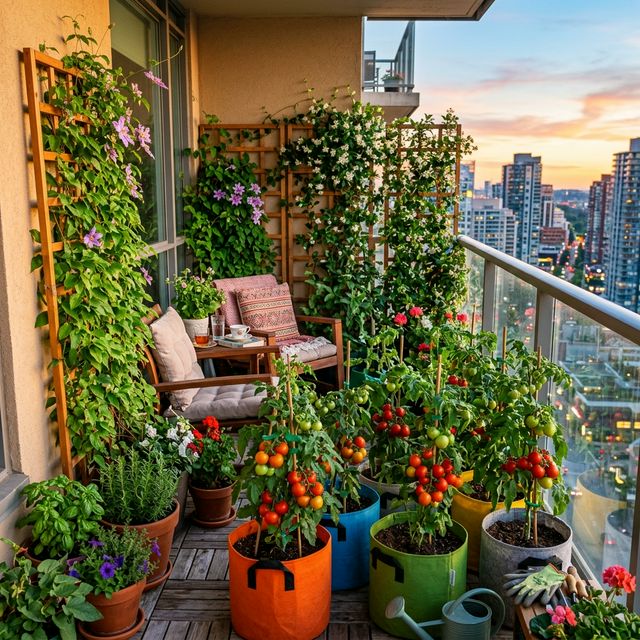
Challenge #3: Watering
Because of the wind and sun, pots dry out incredibly fast on a balcony. In mid-summer, you might need to water twice a day.
The Fix: Mulch. Never leave bare soil exposed to the sun. Cover the top of your soil with 2 inches of straw, wood chips, or even shredded cardboard. This blanket prevents evaporation and keeps the roots cool. It reduces watering needs by 50%.
Best Balcony Crops
1. Cherry Tomatoes: Choose "Indeterminate" varieties if you have vertical space for a trellis, or "Bush" varieties for pots.
2. Peppers: Heat lovers. They thrive on the reflected heat from concrete walls.
3. Strawberries: Grow them in vertical towers or hanging baskets to save floor space.
4. Eggplant: Another heat lover that does great in containers.
Balcony Etiquette: Managing Your Neighbors
Gardening in an apartment is a social act. If your watering can drips on the neighbor's laundry below, your garden won't last long.
1. Saucers are Mandatory: Every single pot must have a deep saucer. Never water so much that it overflows the balcony edge.
2. Secure Everything: In a high-wind event, a lightweight plastic pot becomes a projectile. Use zip-ties or heavy-duty brackets for any planters sitting on the railing.
3. Manage Debris: Falling leaves and spent blooms can clog building gutters. Be a good "garden citizen" and sweep your balcony floor weekly.
Pest Control
Good news: You won't have rabbits or deer. Bad news: You might get aphids or spider mites. Because there are fewer natural predators (ladybugs) high up, pests can multiply fast. Inspect your leaves weekly. If you see bugs, blast them off with a strong stream of water from your hose or watering can. It's the safest, non-toxic remedy.
Navigating HOA and Apartment Rules
Before you invest hundreds of dollars into soil and planters, check your lease or HOA bylaws. Many buildings prohibit hanging boxes outside the railing for liability reasons (a falling pot can be lethal). Others restrict the overall weight you can place on a cantilevered balcony. Some strict HOAs even dictate what types of plants you can grow, banning "unsightly" tall vegetables like corn or sunflowers. Always build your dream garden within the legal constraints of your building to avoid a heartbreaking eviction of your plants.
Maximizing the "Dead Corners"
Every balcony has a dead corner—usually the spot where the siding meets the railing, cast in perpetual shade. Don't waste this space on sun-loving tomatoes. Reserve these shady, cool microclimates for a tiered shelf of leafy greens (spinach, arugula, chard) or use it as the designated storage area for your watering cans, spare pots, and a small, sealed compost bucket. Efficient logistics make small-space gardening infinitely more enjoyable.
Conclusion
A balcony garden is more than just a hobby; it’s a living laboratory. It teaches you to observe the subtle shifts in light, wind, and water. By respecting the physics of your microclimate and being a considerate neighbor, you can turn a few square feet of concrete into the most productive—and peaceful—part of your home.