What if you could grow organic vegetables and raise fresh fish in a single, closed-loop system? Welcome to the world of aquaponics.
Imagine a garden where you never have to weed, never have to use chemical fertilizers, and where the water is recycled indefinitely. This isn't science fiction—it's Aquaponics. By combining aquaculture (raising fish) and hydroponics (growing plants in water), you create a mini-ecosystem that mimics the natural nitrogen cycle of a lake or river.
The Three Pillars of Aquaponics
A successful aquaponics system relies on three living components working in perfect synchronization:
- The Fish: They provide the "fuel." As they eat and live, they produce waste (ammonia).
- The Bacteria: The unsung heroes. They live in the bio-filter and convert toxic ammonia into nitrates (plant food).
- The Plants: They act as a natural filter, sucking up the nitrates and cleaning the water before it returns to the fish tank.
Why Start with Aquaponics?
While hydroponics is excellent, it requires you to buy expensive, lab-made mineral salts. Aquaponics is more resilient and "biological." Once the system is balanced, it's remarkably stable. Plus, you get the added benefit of having fish as pets (or food!).
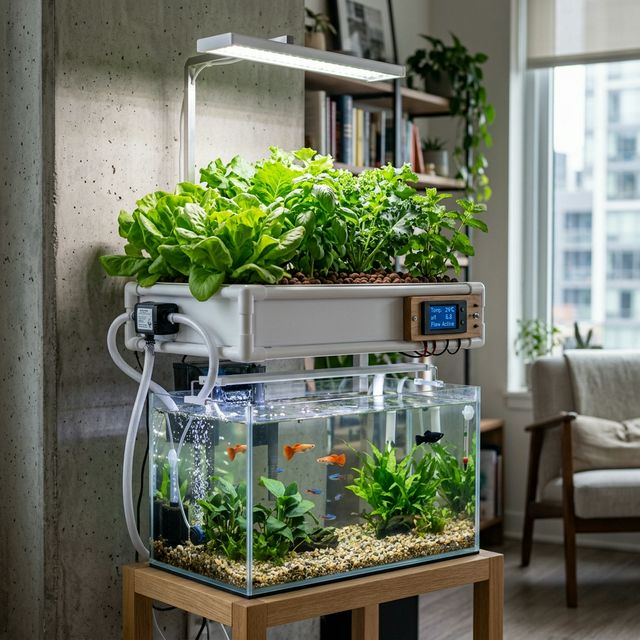
Choosing Your First Fish
Don't jump straight into raising trout or salmon. For beginners, consistency is key:
- Tilapia: The "chicken of the sea." They are incredibly hardy, eat almost anything, and grow fast. Ideal for larger backyard systems.
- Goldfish: Perfect for indoor decorative systems. They produce a lot of waste (which is good for the plants) and are very forgiving of beginner mistakes.
- Koi: Beautiful and long-lived, but they require much larger tanks and more filtration.
Crucial: The "Cycling" Period
You cannot simply add fish and plants on day one. You must "cycle" your system for 2-4 weeks first. This allows the beneficial bacteria colonies to build up. If you add fish too early, the ammonia levels will spike and kill them. Be patient—let the biology catch up to your enthusiasm!
The 30-Day Cycling Timeline
- Days 1-5: Add a small amount of fish flakes or pure ammonia. Ammonia levels will rise.
- Days 6-15: Nitrosomonas bacteria begin to grow, converting ammonia to Nitrite. You will see a Nitrite spike (very toxic!).
- Days 16-25: Nitrobacter bacteria appear, converting Nitrite into Nitrate (plant food).
- Day 30: Ammonia and Nitrite levels should be zero. Nitrate should be rising. Your system is now "cycled" and safe for fish.
Understanding Water Chemistry
In aquaponics, you aren't just a gardener; you're a chemist. There are four main parameters you must monitor weekly to keep your ecosystem alive:
- pH Level: The "sweet spot" is 6.8 to 7.0. If it gets too high, plants can't absorb nutrients. If it's too low, the bacteria colony will go dormant.
- Ammonia: Should always be 0 ppm (parts per million) once cycled. Anything above 1.0 ppm is an emergency for most fish.
- Nitrite: Like ammonia, this should be 0 ppm. It prevents fish from absorbing oxygen into their blood.
- Dissolved Oxygen (DO): High oxygen levels are vital. If your fish are "gaping" at the surface, you need more air stones or more surface agitation.
What Can You Grow?
In a simple media-based system (a bed filled with clay pebbles), you can grow almost anything. However, some plants thrive more than others:
- Leafy Greens: Lettuce, spinach, and kale love the constant supply of nitrates.
- Herbs: Basil, mint, and parsley grow like weeds in aquaponics.
- Fruiting Plants: Tomatoes and peppers can be grown, but they require a very well-established system with higher fish density to provide enough nutrients.
Basic Equipment List
- Tank: A clean, food-grade container (e.g., an IBC tote or a large aquarium).
- Grow Bed: A shallow container sitting above the tank.
- Media: Expanded clay pebbles or river stone (must be pH neutral).
- Water Pump: To lift water from the fish tank to the grow bed.
- Aerator: To keep oxygen levels high for the fish and bacteria.
Troubleshooting common Aquaponic Problems
Systems can go out of balance quickly. Here are the "Rescue" protocols for the most frequent issues:
The Ammonia Spike Rescue
If your test kit shows ammonia rising, stop feeding the fish immediately. Most fish can go a week without food safely. Perform a 20% water change using de-chlorinated water and add supplemental bacteria to bolster the bio-filter.
Yellowing Leaves (Iron Deficiency)
Because aquaponics is a closed loop, certain minerals like Iron or Potassium might run low. If your new leaves are turning pale yellow while the veins stay green, you likely have an iron deficiency. Adding "Chelated Iron" (DTPA) is a safe and common fix that won't harm the fish.
Clogged Grow Beds
If water isn't draining correctly, fish waste might be building up in the media. This creates "dead zones" that can rot plant roots. Ensure you have adequate mechanical filtration (like a swirl filter) before the water hits your grow bed to remove heavy solids.
Final Thoughts on Sustainability
The beauty of aquaponics is that it uses 90% less water than traditional soil gardening. Because the water is constantly recirculated and cleaned, the only water loss comes from evaporation and transpiration from the plants. It is truly the future of urban food production.
Conclusion
Aquaponics is the ultimate way to connect with the cycles of nature, even in a city apartment. It’s a hobby that pays Dividends in fresh food and a deeper understanding of ecology. If you already have a fish tank, you're halfway there!