Hydroponics is faster than soil gardening, but things can also go wrong much faster. Here is how to avoid the "Valley of Death" in your first grow.
I have killed more plants than I can count. I have drowned them, starved them, burned them with lights, and ignored them until they wilted. The beauty of hydroponics is that you learn quickly. But to save you some time (and money), here are the top 5 mistakes that every beginner makes—and how to fix them.
01Ignoring pH Levels
This is the #1 silent killer. You can have the best nutrients in the world, but if your water pH is off, the plant chemically cannot absorb them. It's called "nutrient lockout."
The Fix: For most vegetables (lettuce, peppers, tomatoes), aim for a pH between 5.5 and 6.5. Tap water is usually around 7.0-8.0 (too high). Buy a cheap pH test kit or digital meter. Check it every time you add water.
02Overcrowding the Reservoir
When you plant small seedlings, a 5-gallon bucket looks enormous. You might be tempted to drill 6 holes and plant 6 peppers in one tote. Don't do it.
As plants mature, their root systems become massive tangles. If you have too many plants competing for the same nutrients and oxygen in a small reservoir, they will strangle each other. Root rot becomes inevitable as airflow is choked off.
The Rule of Thumb: 1 fruiting plant (tomato/pepper) per 5-gallon bucket. For lettuce, you can get away with 4-6 plants per tote.
03Letting the Water Get Too Hot
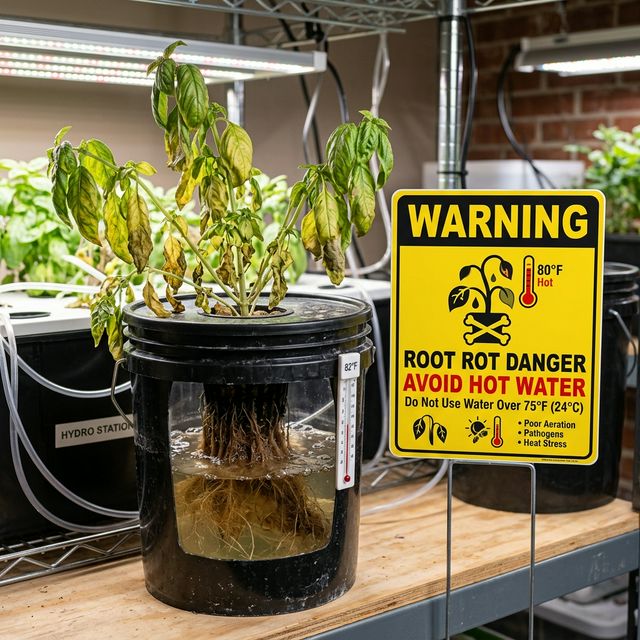
Warm water holds less oxygen than cool water. It's physics. If your reservoir temperature creeps above 75°F (24°C), oxygen levels plummet, and bad bacteria (pythium/root rot) start to party.
The Fix: Keep your reservoirs shaded. If you are growing outdoors, wrap your black buckets in white foil or mylar to reflect the sun. Indoors, ensure your grow lights aren't heating up the water below.
04Weak Lighting
A "grow light" bulb from the hardware store screwed into a desk lamp is not enough for a tomato plant. Plants need high-intensity light (PAR) to photosynthesize effectively.
If your seedlings are growing tall, skinny, and falling over, they are "stretching" for light. This creates weak stems that will snap later.
The Fix: Lower your lights. LED lights should often be 12-18 inches from the canopy. If they are 3 feet away, they are doing nothing. Invest in a proper full-spectrum LED board.
05"Refilling" Instead of "Replacing"
In a Kratky or DWC system, you need to top off the water as plants drink. But you can't just keep adding fresh water and nutrients forever.
Over time, plants eat certain minerals faster than others, creating a toxic imbalance of salts in the remaining water. If you never do a full water change, your plant will eventually look sick despite having plenty of water.
The Fix: Every 2-3 weeks, dump the reservoir completely. Clean it out. Fill it with fresh, pH-balanced nutrient solution. Think of it like flushing the toilet—you want a clean start.
Expert Insight: The "Observation Log"
The biggest mistake isn't technical—it's observational. Most hydroponic disasters happen slowly, then all at once. Keep a simple notebook next to your reservoir. Record the pH and EC (Electrical Conductivity) every time you water. After three months, you'll start to see patterns. You'll notice that your plants drink more water during a heatwave, which spikes the nutrient concentration. This data is your best defense against future mistakes.
Conclusion
Hydroponics rewards precision. You are acting as Mother Nature, controlling the sun, rain, and soil chemistry. It sounds like a lot of responsibility, but once you dial in these 5 variables, you will see growth speeds that soil gardeners can only dream of.