We crunched the numbers on electricity, nutrients, and equipment versus just buying salad at the grocery store. The results might surprise you.
There is a common misconception that hydroponics is an expensive hobby for tech-bros who want to grow "tomatoes" in their closet. And yes, if you buy a $900 pre-built automated tower, you will never break even on lettuce. But if you approach it efficiently, hydroponics can actually be cheaper than soil gardening—and vastly cheaper than buying organic produce.
The Variable Costs: Soil vs. Water
In traditional gardening, your recurring cost is soil. Good potting mix costs about $15 per cubic foot. And after one season of growing heavy feeders like tomatoes, that soil is depleted. You have to buy fertilizer to amend it or replace it entirely.
In hydroponics, your "soil" is water. Water is effectively free. Your recurring cost is nutrients. A 2.2lb bag of high-quality dry nutrient salts (like Masterblend directly) costs about $25. That single bag can make over 300 gallons of nutrient solution.
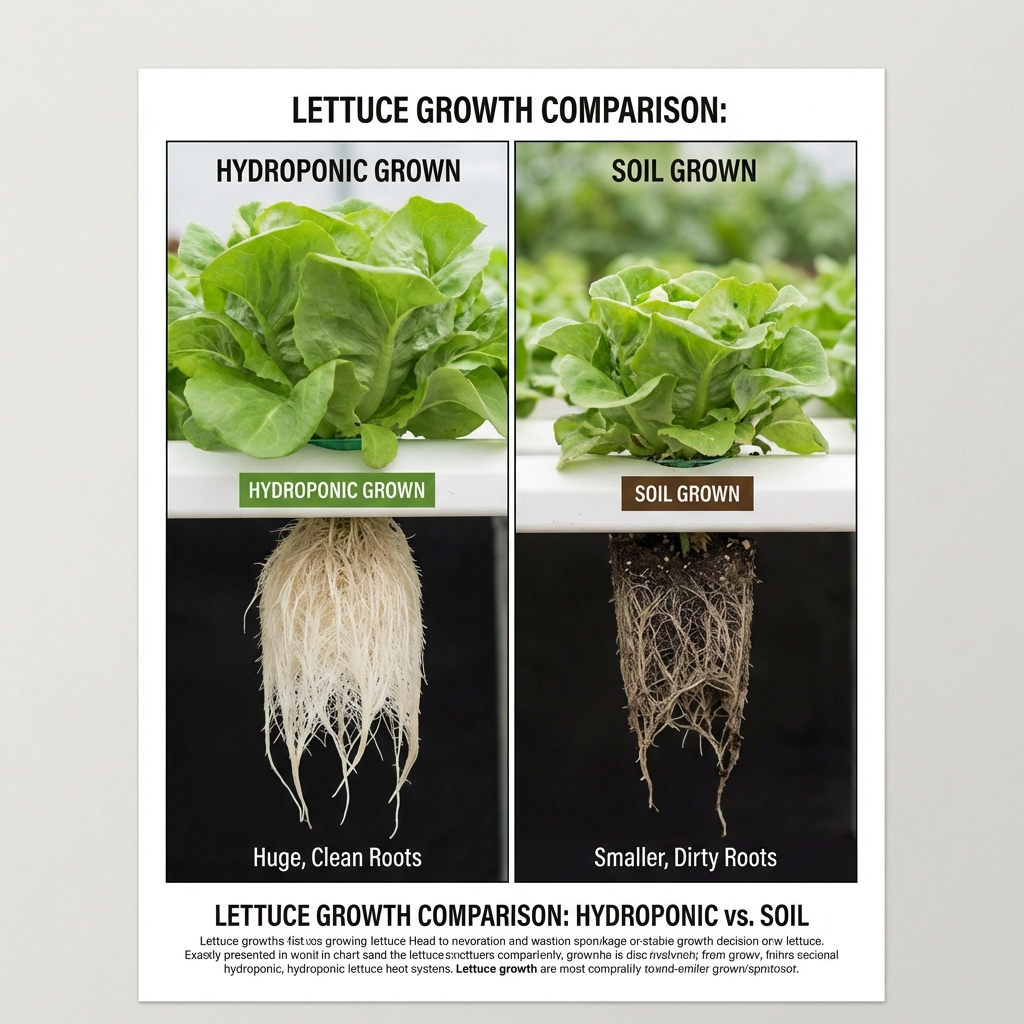
Hydroponic plants (left) invest less energy in roots and more in leaves because food is readily available.
Yield Comparison: The Hidden Multiplier
This is where the math gets interesting. A soil-grown lettuce head takes about 60-70 days to mature from seed. A hydroponic lettuce head takes 35-45 days.
Why? In soil, roots have to hunt for minerals. They expend energy pushing through heavy dirt. In hydroponics, the minerals are dissolved in highly oxygenated water right against the root hairs. The plant doesn't have to "work" for food, so it puts 100% of its energy into growing leaves.
This means in a single year, you can get 2 extra harvest cycles from the same square footage using hydroponics.
The Expense Breakdown (DIY Setup)
Let's look at the cost of a simple "Kratky" setup for growing 6 lettuce plants:
| Item | Hydroponic Cost | Soil Cost |
|---|---|---|
| Container | $10 (Storage tote) | $20 (2x Window boxes) |
| Medium | $5 (Clay pebbles, reusable forever) | $15 (Potting soil, annual) |
| Nutrients | $0.50 (per grow) | $2.00 (Fertilizer) |
| Total Year 1 | $15.50 | $37.00 |
The Electricity Factor
The elephant in the room is lighting. If you grow outdoors, the sun is free for both methods. But indoors, you pay for photons.
A standard 200W LED grow light running 12 hours a day consumes 2.4 kWh per day. At the US average of $0.15/kWh, that is $0.36 per day, or roughly $10 per month.
If that light covers a 2x4 foot area growing 16 heads of lettuce, your electricity cost per head is about $0.60. Add in the seed and nutrient cost ($0.10), and you are growing premium, pesticide-free living lettuce for $0.70 per head.
Compare that to the grocery store, where a plastic clamshell of "organic spring mix" is now $5.99. You are saving over $5 per week just on salad.
Conclusion
Hydroponics has a higher learning curve, but a lower long-term operating cost. Once you buy your equipment (lights and buckets), the ongoing cost is pennies. If you eat a lot of leafy greens or fresh herbs, the system pays for itself in about 4 months.