When you only have 20 square feet of balcony, the only way to go is up. But not all towers are created equal.
Vertical gardening is the holy grail for urban farmers. By stacking plants vertically, you can theoretically turn 1 square foot of floor space into 5 or 6 square feet of growing area. However, the market is flooded with cheap, unstable plastic towers that tip over in the wind or dry out unevenly. We tested the most popular options to see which ones actually work.
The Problem with "Cheap" Stackers
If you go to a dollar store or a generic garden center, you will see clover-shaped stacking pots for $5 each. Beware. These usually suffer from two fatal flaws:
- Poor Watering Mechanics: When you water the top pot, the water trickles down to the second, then the third. By the time it reaches the bottom, the water is muddy and possibly nutrient-depleted. Or worse, the top plants drown while the bottom plants stay dry.
- Instability: Once filled with heavy wet soil, cheap plastic buckles. A strong gust of wind (common on balconies) can topple the whole tower.
The Gold Standard: GreenStalk Leaf
In the gardening community, the GreenStalk is widely considered the best soil-based vertical system. Why? Because of its patented internal watering reservoir.
You fill the top reservoir with water, and it distributes water simultaneously to every single tier through a center tube. This means the bottom plant gets the same amount of fresh water as the top plant. It's brilliant engineering.
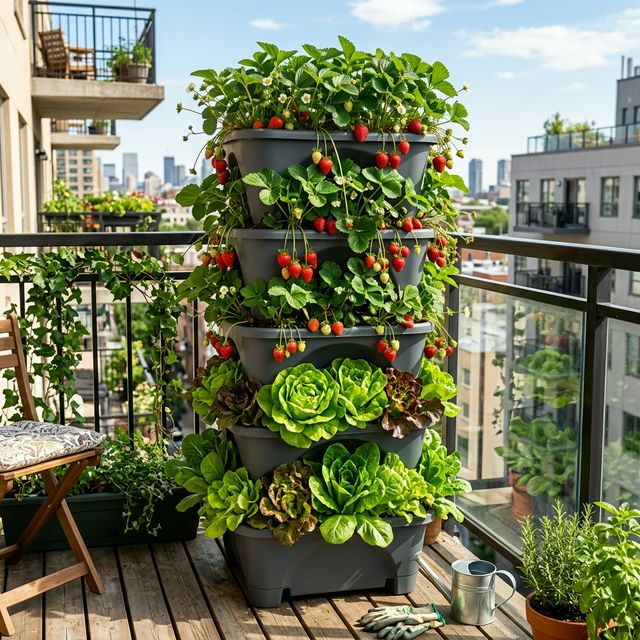
Capacity: A 5-tier tower can hold 30 plants (strawberries, greens, herbs) in a footprint the size of a dinner plate.
Hydroponic Towers: The Mr. Stacky Option
If you want to go soilless, the "Mr. Stacky" system is a popular DIY choice. You stack the pots on a ½ inch PVC pipe (for stability) and use a small aquarium pump to push water from a reservoir at the bottom to the top.
Pros: Automated watering. Faster growth.
Cons: Requires electricity. Pump noise. Risk of leaks.
3. The Physics of the Tower: Weight and Wind
A common mistake in urban vertical gardening is underestimating static load. A 5-tier tower filled with wet soil and mature plants can weigh over 200 lbs.
Warning for Balconies: Most modern apartment balconies are rated for 40-60 lbs per square foot. While a single tower is usually safe, placing four of them in one corner could exceed your structural limits. Always check with your building management if you plan on a "vertical forest."
Managing Wind Load
Vertical towers act like sails. If you live on a high floor, the wind can easily topple even a heavy GreenStalk.
The Fix: Use a heavy-duty "spinner" base or a rolling caster base that can be locked. Better yet, tether the top of your tower to the balcony railing using a high-tension bungee cord or galvanized wire. This allows the tower some "give" in the wind without letting it tip over.
4. Optimal Placement: The "Rotation Trick"
In a vertical system, one side is always facing the sun while the other is in the shade. This leads to uneven growth, where your lettuce on the north side becomes "leggy" and bitter while the south side thrives.
The Solution: Rotate your tower 90 degrees every single day. If you have a spinner base, this takes 2 seconds. If not, mark one side of your pot with a piece of tape so you can track your rotation. Consistent light exposure is the difference between a mediocre harvest and a massive one.
5. Maintenance: Preventing Algae and Clogs
Because vertical systems rely on narrow internal channels for watering, they are prone to clogs.
1. Filter Your Water: If you have hard water, calcium deposits can build up in the internal reservoirs. Use filtered water or add a tablespoon of apple cider vinegar to your 5-gallon watering can once a month to dissolve mineral scale.
2. Algae Control: Light reaching the internal water channels can cause green algae growth. If your tower is white or translucent, consider painting the internal reservoirs black (on the outside) to block light.
3. Root Encroachment: Occasionally, aggressive roots (like mint or strawberries) will grow up into the watering holes. Check these once a month and trim back any "rebels" that are blocking the flow.
What Should You Grow Vertically?
Not everything belongs in a tower.
YES: Strawberries (they love hanging down), Lettuce, Spinach, Bush Beans, Thyme,
Oregano.
NO: Tomatoes (too big), Zucchini (way too big), Corn (needs wind pollination), Root
veggies (not deep enough).
Best Herbs for Stackers
If you choose to dedicate a whole tower to herbs, you have created a culinary powerhouse. However, you must plant them strategically. Put drought-tolerant Mediterranean herbs (Rosemary, Thyme, Oregano) at the very top where the soil dries out the fastest. Plant water-loving herbs (Mint, Lemon Balm, Parsley) at the bottom tiers where gravity pulls the excess moisture. This creates a perfect microclimate for each species.
Winter Storage and Cleaning
Leaving a plastic tower outside full of wet soil during a hard freeze is a recipe for cracked plastic. When the season ends, disassemble the tiers, dump the soil into a storage bin or compost pile, and scrub the plastic with a mild bleach solution. Store the nested tiers indoors or in a garage. This simple hour of maintenance ensures your investment lasts for a decade rather than a single season.
Conclusion
Vertical gardening isn't just a trend; it's a necessity for the modern city dweller. It allows us to reclaim our food sovereignty in the smallest of spaces. By choosing a high-quality system and following these physics-based maintenance tips, you can turn a barren concrete corner into a lush, productive vertical farm that feeds you all season long.