They fly up your nose. They fall in your coffee. And they are eating your plant's roots. Here is the nuclear option for ending the infestation.
If you have indoor plants, you probably have fungus gnats. They are those tiny, weak-flying black bugs that hover around the soil. While the adults are just annoying, the larvae live in the soil and eat organic matter—including the delicate root hairs of your plants. A bad infestation can stunt growth and yellow leaves.
Why You Have Them
Fungus gnats love two things: Moisture and decaying organic matter. If you water your plants too often and the topsoil stays wet, you are inviting them to lay eggs. Bags of cheap potting soil often come pre-infested with eggs from the garden center.
The Lifecycle of a Nuisance
To defeat the gnat, you must understand its timeline. A single female can lay up to 200 eggs in her short 1-week life.
• Eggs (3 days): Laid in moist soil crevices.
• Larvae (14 days): The destructive phase. They look like translucent white worms with black heads.
• Pupae (4 days): They form a silk-like cocoon in the top layer of soil.
• Adults (7 days): The flying stage. They don't eat; they only mate and lay more eggs.
If you only kill the adults, you are leaving 90% of the population alive in the soil. This is why multi-stage treatment is non-negotiable.
The 3-Step Elimination Plan
Don't bother with apple cider vinegar traps. They catch a few adults, but they don't stop the breeding cycle. You need to fight on three fronts.
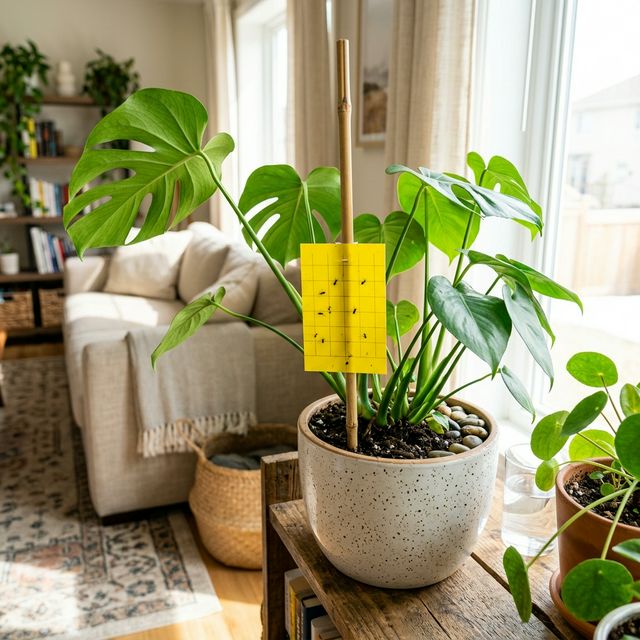
1. The Yellow Sticky Trap (Air War)
Buy a pack of yellow sticky cards. Cut them into squares and place them near the soil surface of every single plant. Adult gnats are attracted to the yellow color. They land, get stuck, and die. This prevents them from laying more eggs.
2. Mosquito Bits (Biological Warfare)
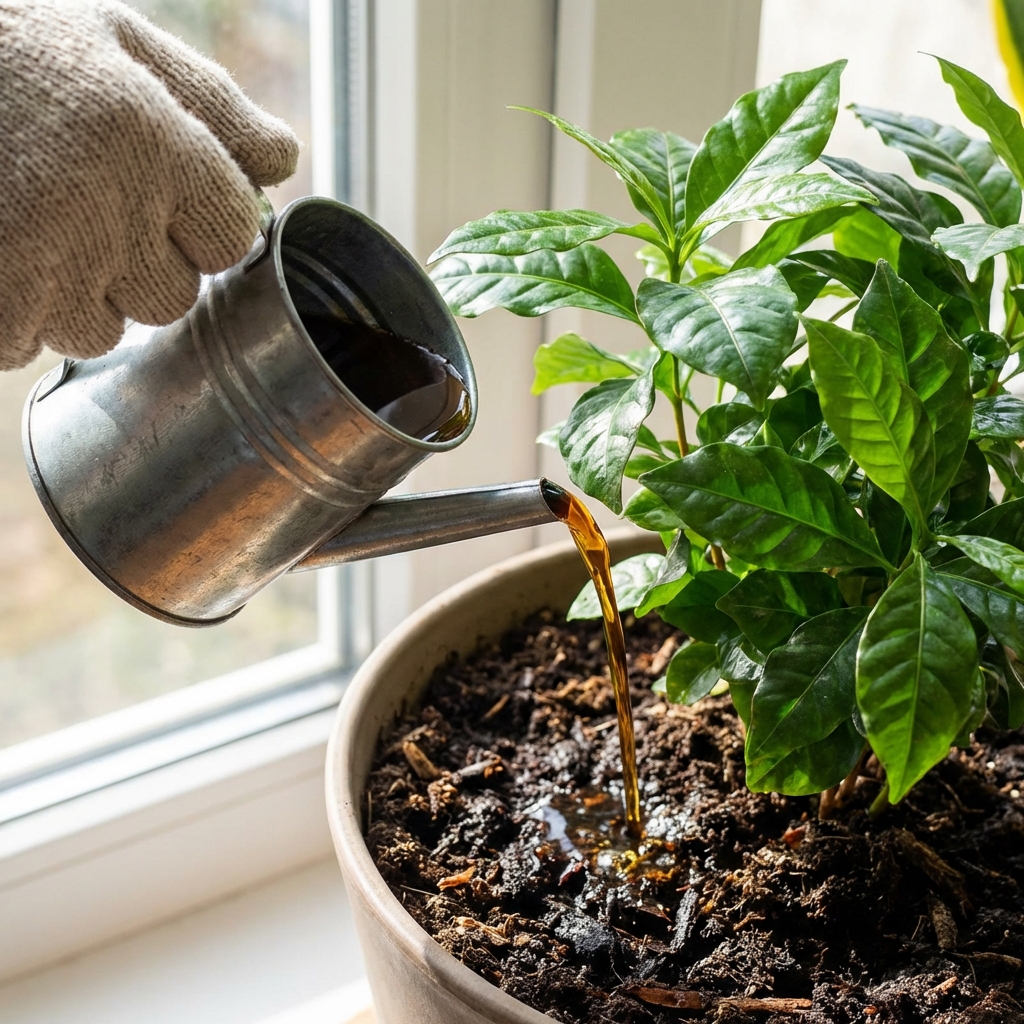
This is the secret weapon. "Mosquito Bits" (or Gnatrol) contain a bacteria called Bacillus thuringiensis israelensis (BTI). This bacteria is harmless to humans and pets, but toxic to gnat larvae.
How to use: Don't just sprinkle them on top (they mold). Soak 4 tablespoons of bits in a gallon of warm water for 30 minutes. Strain out the solids, and use the "tea" to water your plants. This saturates the soil with BTI, killing the larvae instantly.
3. The Drought (Environment Control)
Let your plants dry out. Gnats cannot reproduce in dry soil. Wait until your plants are slightly drooping before watering again. For extreme cases, cover the top inch of your soil with sand or decorative gravel. This creates a "dry desert" barrier that adults cannot dig through to lay eggs.
4. Advanced Prevention: The "Sand Barrier" Technique
If the drought isn't working, it's time for physical exclusion. Fungus gnats are weak diggers. They need soft, moist organic matter to lay their eggs.
The Trick: Spread a 1/2 inch layer of horticultural sand or fine aquarium gravel across the entire surface of the soil. This layer dries out instantly and feels like jagged glass to a soft-bodied gnat. They can't get down to the soil, and larvae that hatch can't crawl up. It's a clean, aesthetic, and permanent solution.
Frequently Asked Questions
Q: Can fungus gnats bite humans?
A: No. Unlike mosquitoes, fungus gnats don't have mouthparts designed for biting. They are purely a nuisance to humans, though they can carry fungal diseases (like Pythium) from plant to plant on their feet.
Q: Will they go away on their own?
A: Rarely. As long as there is moist soil and decaying roots, they will continue to breed. Ignoring them usually results in the infestation spreading to every plant in your home.
Q: Are "Yellow Traps" enough?
A: No. Yellow traps only catch adults. If you don't treat the soil with BTI or a sand barrier, the next generation will just keep hatching.
Differentiating Gnats from Fruit Flies
Before you launch a full-scale assault, ensure you are fighting the right enemy. Fungus gnats look like tiny black mosquitoes with long legs, and they hover erratically near the soil of your plants. Fruit flies are slightly larger, have a brownish-orange hue, and hover near your kitchen trash or overripe fruit. BTI (Mosquito Bits) will do absolutely nothing against fruit flies, so proper identification is critical.
The Danger of Pesticide Resistance
Many beginners reach for broad-spectrum chemical sprays when faced with gnats. This is a mistake for indoor gardening. Not only do you expose your living space to harsh chemicals, but fungus gnats reproduce so rapidly that they can develop resistance to synthetic insecticides within a few generations. By using biological controls (BTI) and physical barriers (sand and yellow traps), you employ methods that insects simply cannot evolve to resist.
Alternative Biological Controls: Nematodes
If you have a massive indoor jungle and BTI isn't cutting it, consider beneficial nematodes. These are microscopic roundworms (specifically species like Steinernema feltiae) that actively hunt down and consume gnat larvae in the soil. They are applied via a watering can and act as a living, self-replicating defense force. Once the gnat larvae are gone, the nematodes naturally die off.
Conclusion
Banishment is a game of persistence. By combining the "Air War" (traps), "Biological Warfare" (BTI), and "Environmental Control" (Drought/Sand), you can break the breeding cycle in under 14 days. Your coffee—and your plants—will finally be safe.