So you've bought a bucket, some nutrients, and an air pump. You're ready to start your hydroponic journey. But what should you actually grow?
Choosing the right plant for your first hydroponic system is the difference between a frustrating mess of rotting roots and a bountiful harvest. Many beginners make the mistake of starting with complex fruiting plants like tomatoes or peppers, which require specific light cycles, pollination, and structural support.
If you want to build confidence and get a quick win, you need plants that love water, grow fast, and aren't picky about nutrient fluctuations. Here are the top 5 crops that are practically guaranteed to succeed in a beginner hydroponic setup.
1. Lettuce (Lactuca sativa)
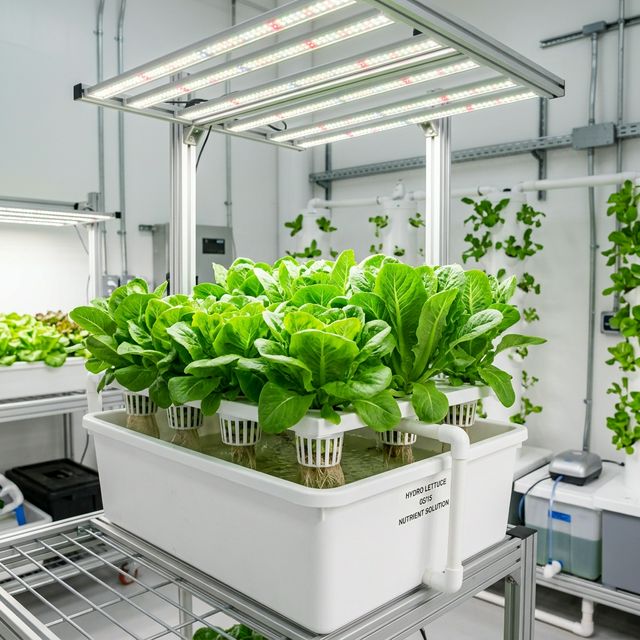
Lettuce is the undisputed "Hello World" of hydroponics. It is, without a doubt, the easiest plant to grow without soil. Because lettuce has a small root system and grows rapidly, it is perfect for simple setups like the Kratky Method or Deep Water Culture (DWC).
Why it's great: You can harvest leaf lettuce in as little as 30 days. It thrives in cooler temperatures and requires lower light levels than fruiting plants. Plus, there's nothing quite like the crunch of lettuce that was growing in your living room ten minutes ago.
Pro Tip: stagger your planting. Start 2-3 seeds every week so you have a continuous supply of salad greens rather than 20 heads of lettuce all maturing on the same day.
2. Spinach (Spinacia oleracea)
Spinach is another leafy green that takes to water like a fish. It is incredibly nutrient-dense and grows quickly. However, spinach can be a little sensitive to heat. If your grow lights are too hot or your water gets above 75°F (24°C), spinach tends to "bolt" (flower and turn bitter).
In a hydroponic system, you can keep spinach crisp and sweet by ensuring your reservoir stays cool. It's an excellent crop for a basement setup or a cooler part of the house.
Harvesting: Like lettuce, you can practice "cut and come again" harvesting. Snip the outer leaves for your morning smoothie and let the center continue to grow.
3. Asian Greens (Bok Choy / Tatsoi)
If you want speed, look no further than Asian greens. Varieties like Bok Choy, Pak Choi, and Tatsoi are absolute speed demons in a hydroponic system. Some varieties are ready to harvest in just 3-4 weeks.
These plants are heavy water drinkers, so they love DWC systems where their roots are constantly submerged in oxygenated nutrient solution. They are also less prone to tip burn than lettuce and have a robust, crunchy texture that holds up well in stir-fries.
4. Herbs (Basil & Mint)
Okay, technically these are herbs, not vegetables, but no hydroponic list is complete without them. Basil in particular grows explosively in hydroponics—often 3x faster than in soil. The flavor is often more intense, and the leaves are more tender.
Mint is another contender, but be warned: mint is aggressive. Its root system will rapidly take over your entire reservoir, potentially choking out other plants. If you grow mint, give it its own dedicated container to contain the beast.
5. Strawberries
Ready for a challenge? Once you've mastered leafy greens, strawberries are the best entry point into fruiting plants. They are perennial, meaning one plant can produce fruit for years.
Hydroponic strawberries are famous for being sweeter and juicier than store-bought ones because you can let them ripen fully on the vine. They do require more attention to pH (keep it between 5.5 and 6.0) and specific nutrient formulas for the flowering stage, but the reward of fresh winter berries is unmatched.
Common Beginner Mistakes to Avoid
Even with these easy plants, things can go wrong. Here are two things to watch out for:
1. The Light Factor
Just because they are "low light" plants doesn't mean "no light." A sunny windowsill is rarely enough for dense, high-quality growth. Invest in a basic full-spectrum LED grow light. If your plants look tall and stretchy (leggy), they are screaming for more light.
2. Drowning the Roots
Roots need oxygen just as much as they need water. In a Kratky system, never fill the container to the top— always leave an air gap. In a DWC system, ensure your air pump is running 24/7. If roots turn brown and slimy, you have root rot, usually caused by lack of oxygen.
Conclusion
Hydroponics doesn't have to be basically a science experiment that requires a PhD to understand. By starting with these five forgiving crops, you build the skills and confidence needed for more complex gardening. Start with a head of lettuce, and before you know it, you'll be designing vertical towers for year-round food production.